In photography, the circle of confusion is used to describe the depth of field, the part of an image that is acceptably sharp. It is controlled by the lens aperture diameter usually specified in f-stops. The smaller the aperture, the wider or deeper the depth of field. Theoretically, the aperture can be infinitely small. Unfortunately, at reduced apertures, diffraction and aberrations will set in, defeating the purpose of achieving a final image of extreme sharpness, clarity, and detail. These limitations can be overcome with a technique called focus stacking. It combines multiple images focused on different planes that are then reassembled in post production resulting in an image with a greater depth of field than any of the individual source images. Inversely, many photographers will prefer a shallow depth of field in order to detach the subject from its background. This creative choice subconsciously informs the viewer about the position and scale of the subject in relation to its environment and the photographer. Since I have yet to conjure up a thought or remember a dream where being out-of-focus was a feature I can only surmise that the ramifications are purely lens-based. At worst a byproduct of mechanical limitations, at best a device, a language. Instead, in a through and through tack sharp image, relational and visual cues of scale, distance, and context are lost. The subject is thus represented in its purest form. This intentional removal of any environmental or procedural plasticity from my subjects results in a dimensionality that never was and where subject, artist and viewer are on equal footing.
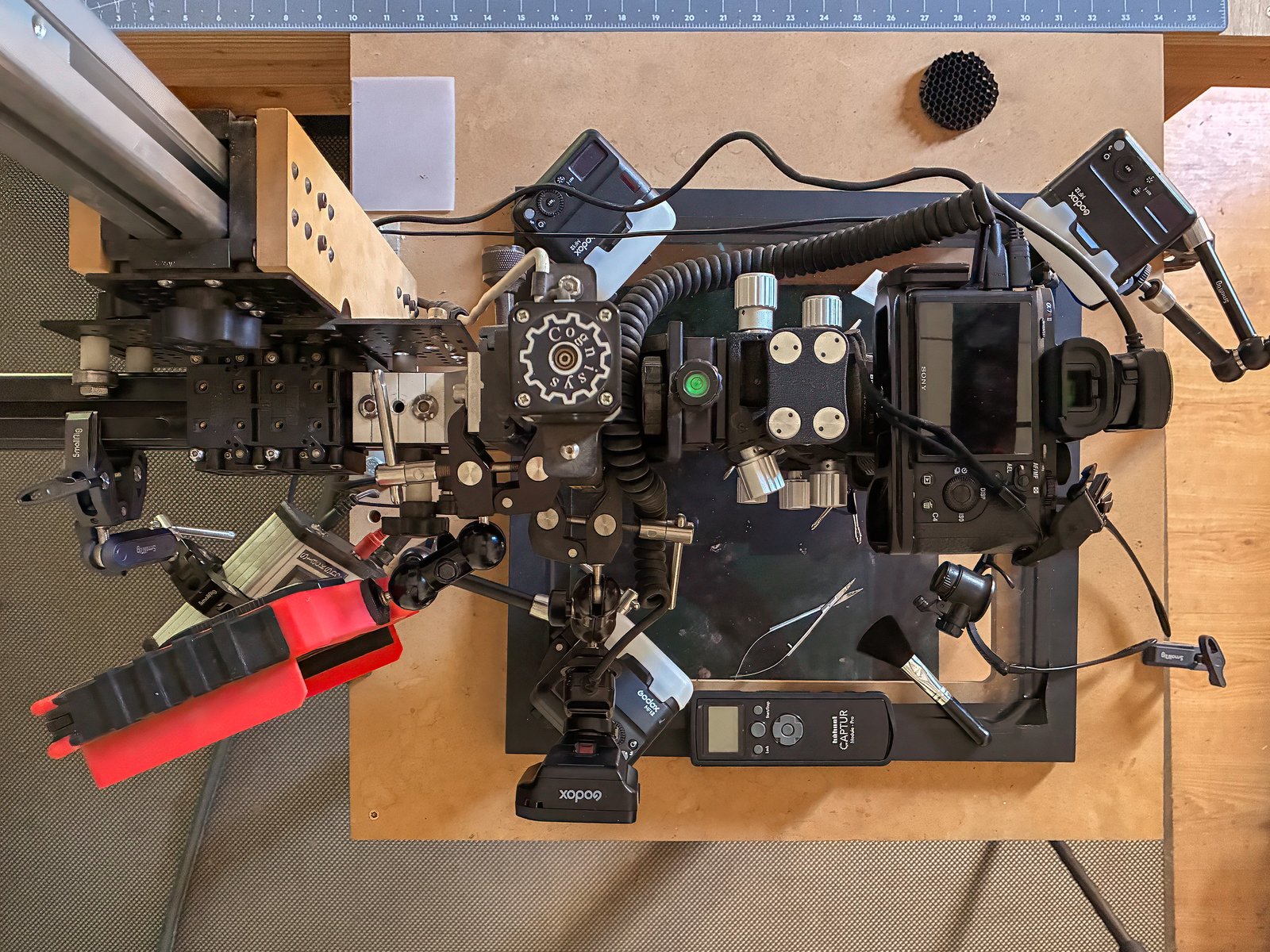
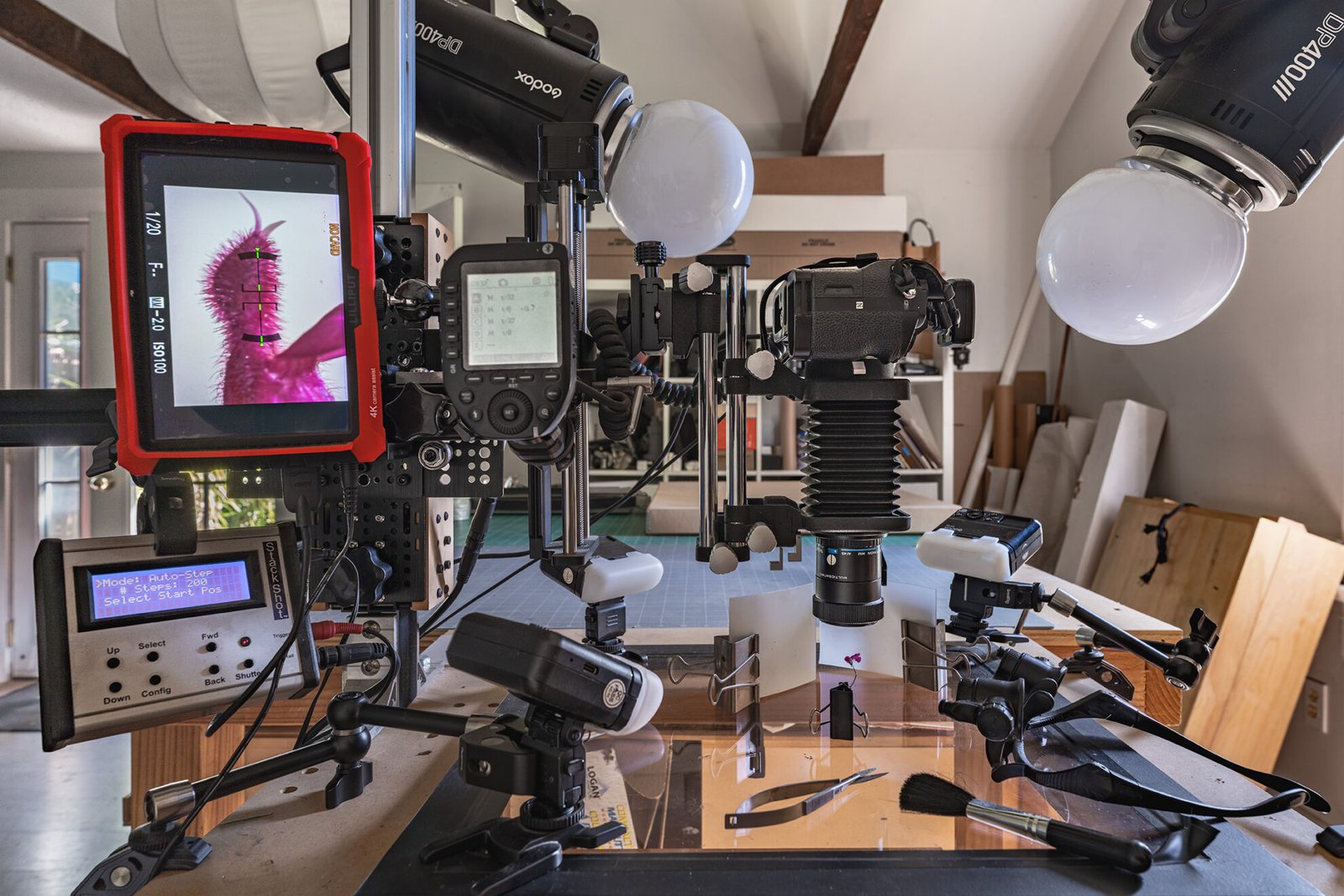
The kind of photography I practice is more likely to be found in a laboratory rather than a soundstage. It is a hodgepodge of devices assembled for a specific task and not readily available as a “key in hand” package. Each component is either sold separately or custom made. Gone are many of the technical features of modern cameras. No autofocus. No image stabilization. No auto exposure. All unnecessary and detrimental to a process that demands complete control from the operator. Stabilization is provided by a rock solid four way column stand made of aluminum extrusions. The entire camera rig slides on a homemade carriage with more ball bearings than a pair of inline roller skates. Rather than turning a ring to achieve focus, the camera’s focus plane is adjusted by physically moving the camera toward or away from the subject with the help of a computer-controlled actuator in increments down to 2 µm (microns). This micro stepping can be repeated precisely without human intervention, thus preventing any disturbances detrimental to a razor sharp end result. Lighting is achieved by a multitude of strobes and flashes all synced together by a centralized controller insuring simultaneous and repeatable firings.
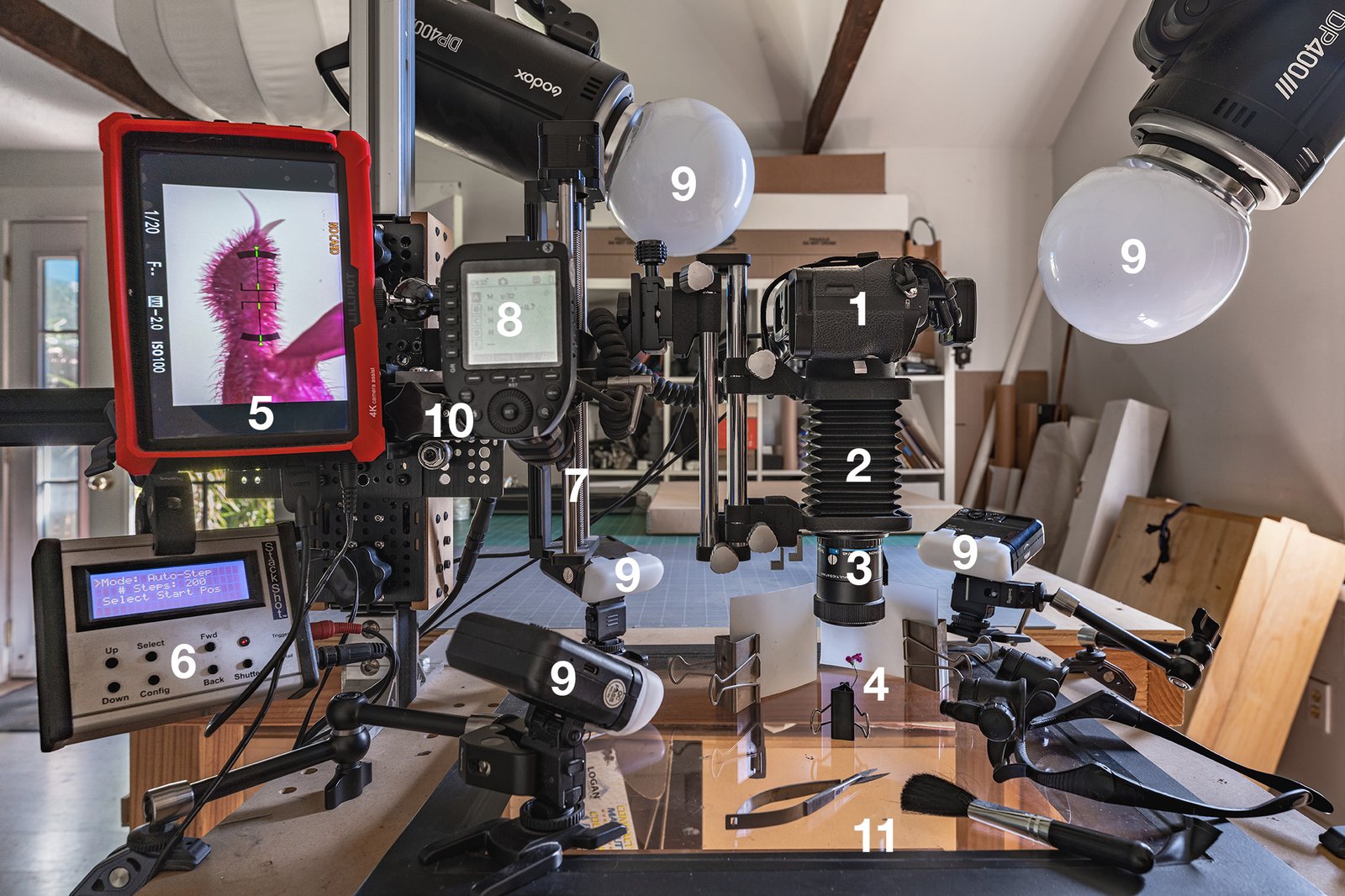
- Camera
- Bellows
- Lens
- Subject
- Reference Monitor
- Robotic Arm Controller
- Robotic Actuator/Arm
- Multiflash Controller
- Strobes/Flashes
- Vertical and Horizontal Slider
- Moveable Transparent Work Surface
In mathematics, infinity is a state of endlessness without time, space, or quantitative limits. An accepted convention never to be tested. The images I produce are faithful representations of occurrences that indeed took place but were never experienced as depicted. They are genuine, not as authentic descriptions but as ciphers devised to help us make sense of the observable universe that surrounds us.
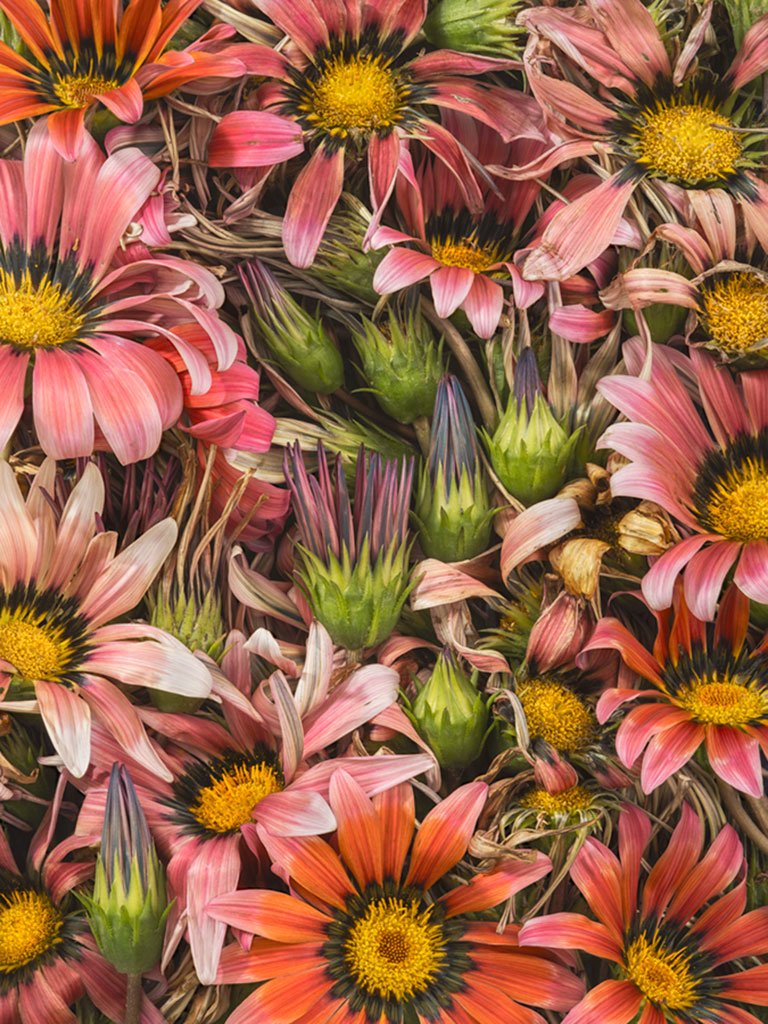
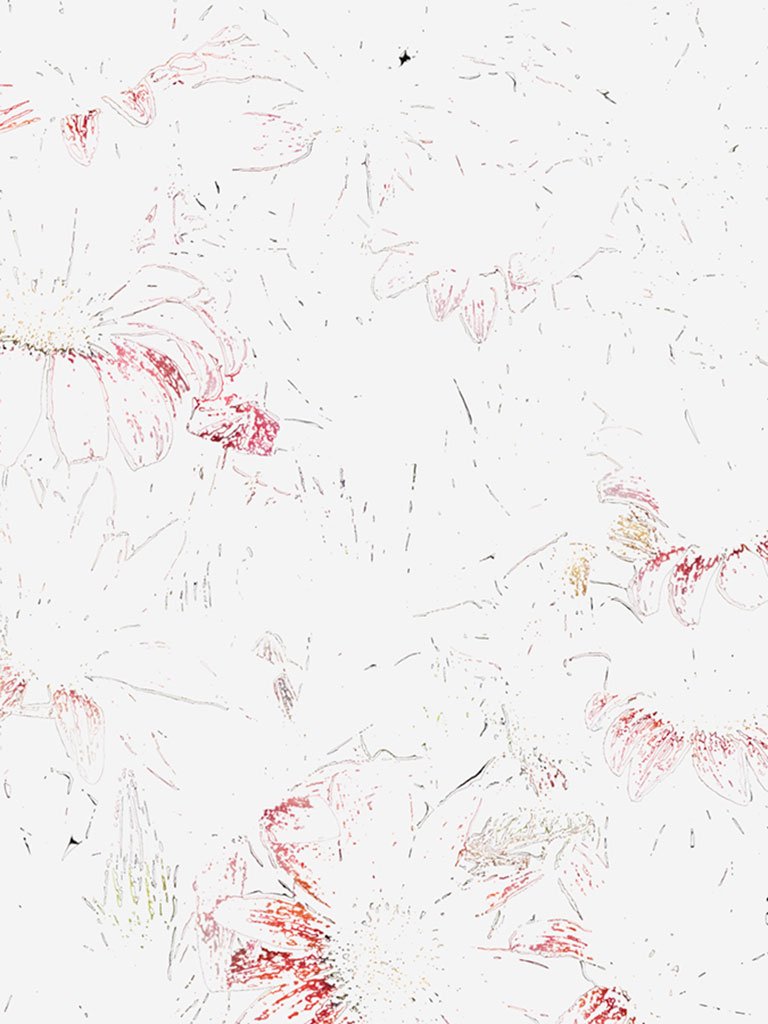
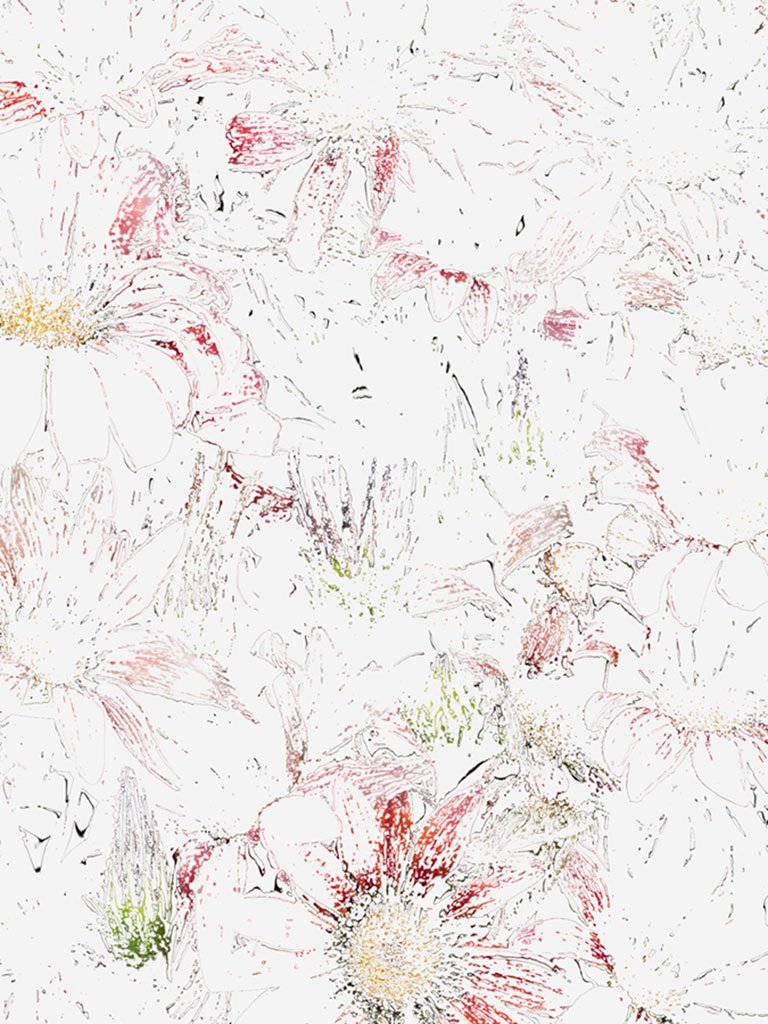
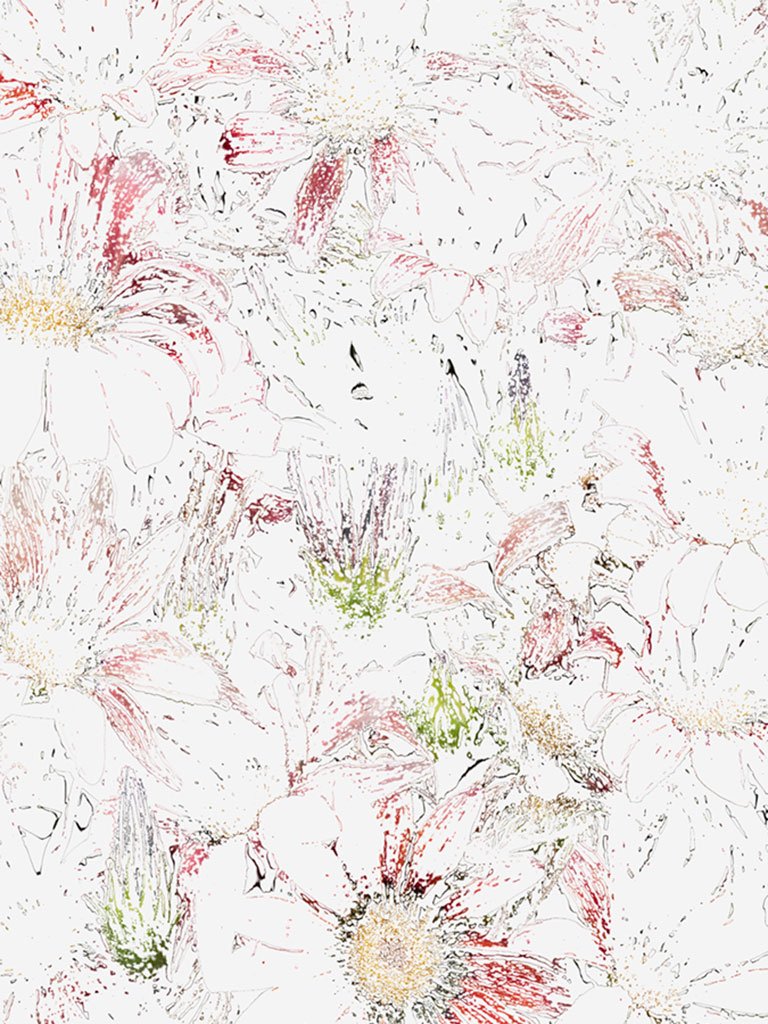
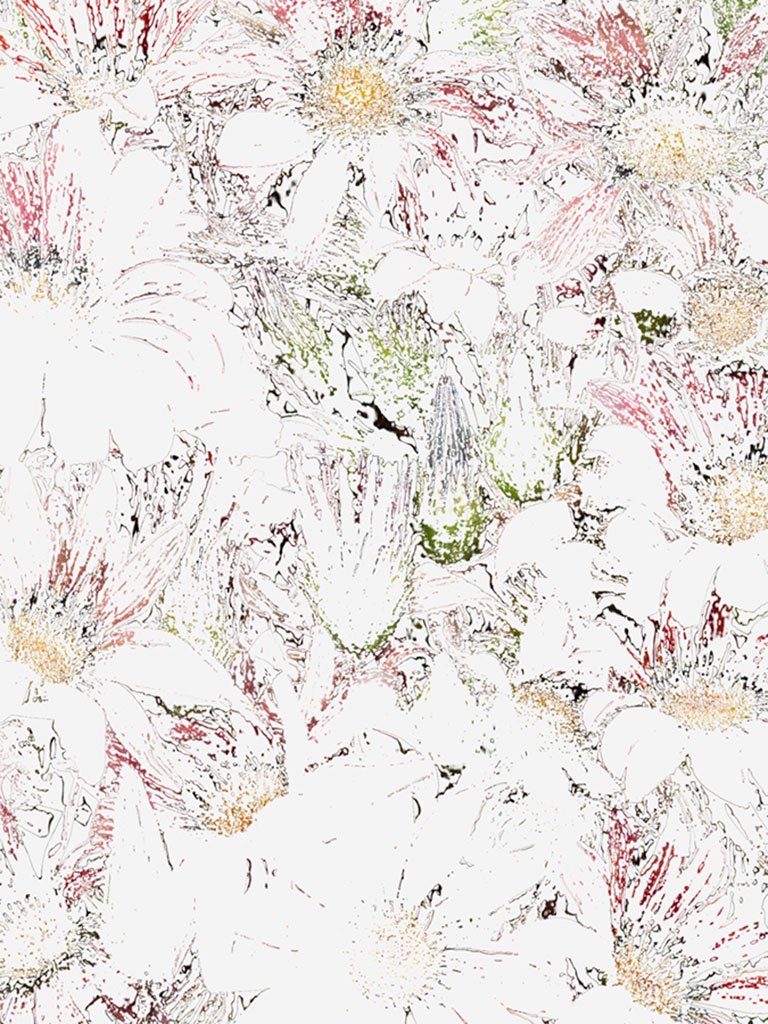
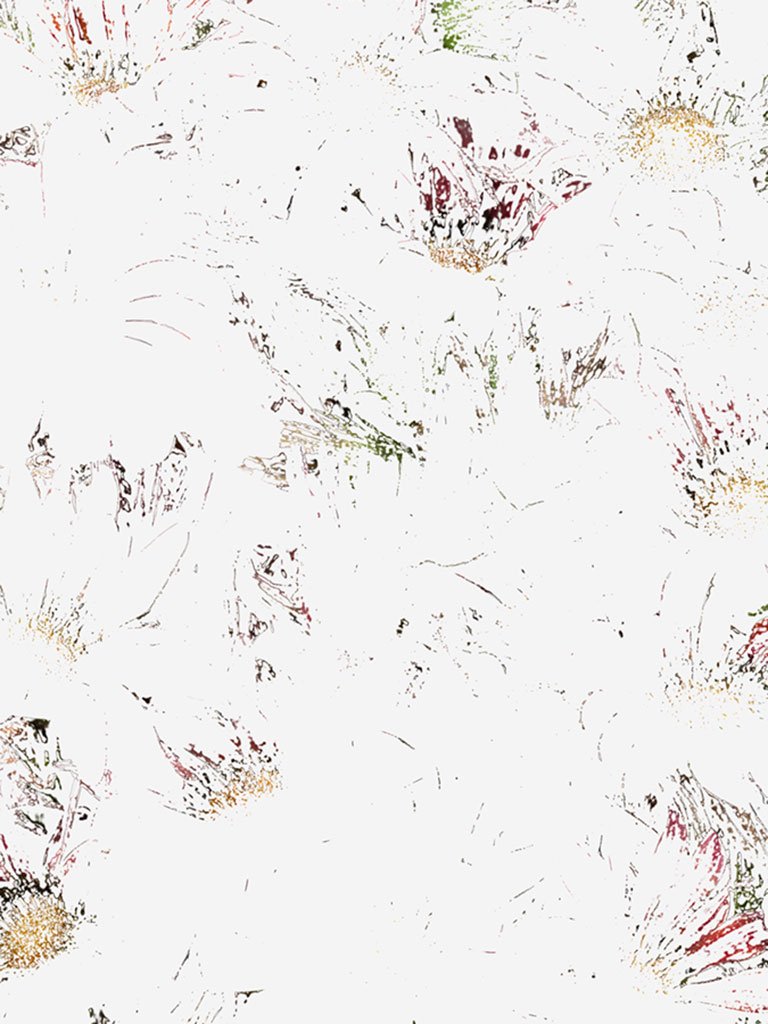
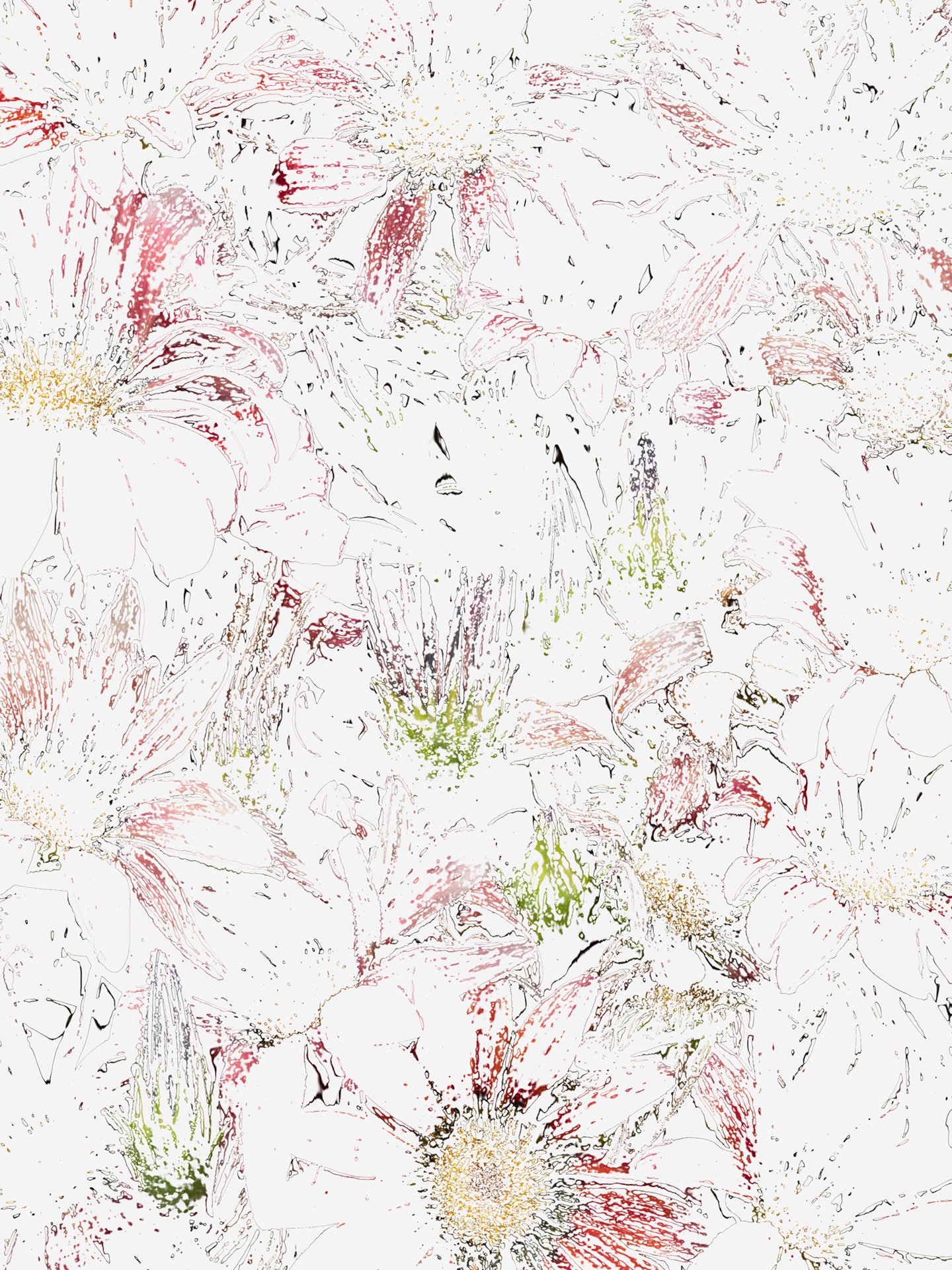
In the slides below, this final composite of treasure flowers; Gazania rigens; is an amalgam of 200 shots taken in 2023. The white images are a simplified series of 5 of theses shots whose out-of- focus areas have been removed. The remaining in-focus elements are then superimposed before retouching and color grading can commence.